


OpenFOAM* Mesh Spacing Tool
OpenFOAM is leading software for computational fluid dynamics (CFD), licensed free and open source, with a user base spanning industry, government research and academia worldwide. We demonstrate here a GUI-based tool using AFid, for quickly and easily creating and replicating mesh spacing rules (for use in snappyHexMesh) based on matching ...
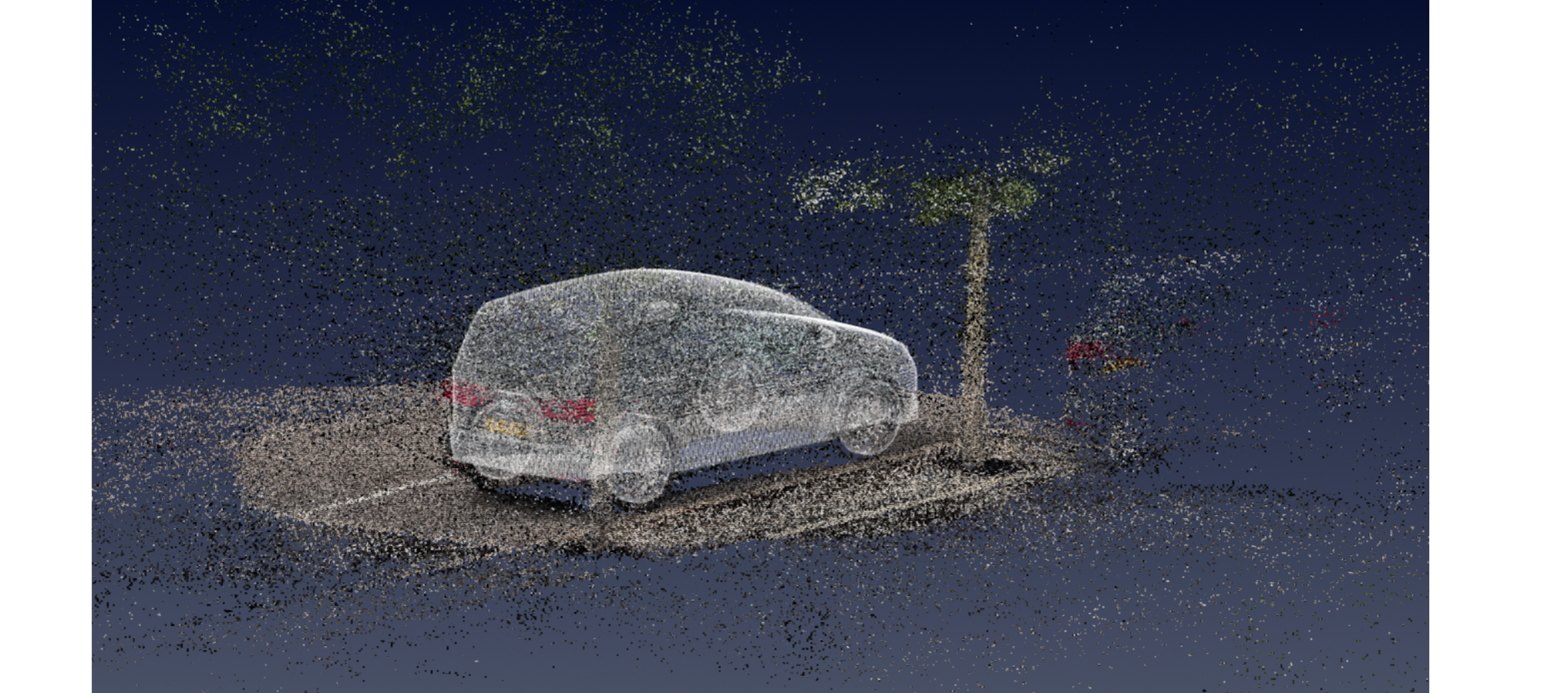
Target Vehicle Identification in Video / EO Sensor Data
AFid can find geometric library items in 3D point clouds constructed from raw video or EO sensor data. In this example, a 3D point cloud has been created using the SIFT algorithm. The VW vehicle represented by open source CAD geometry has been correctly found and oriented within the large ...
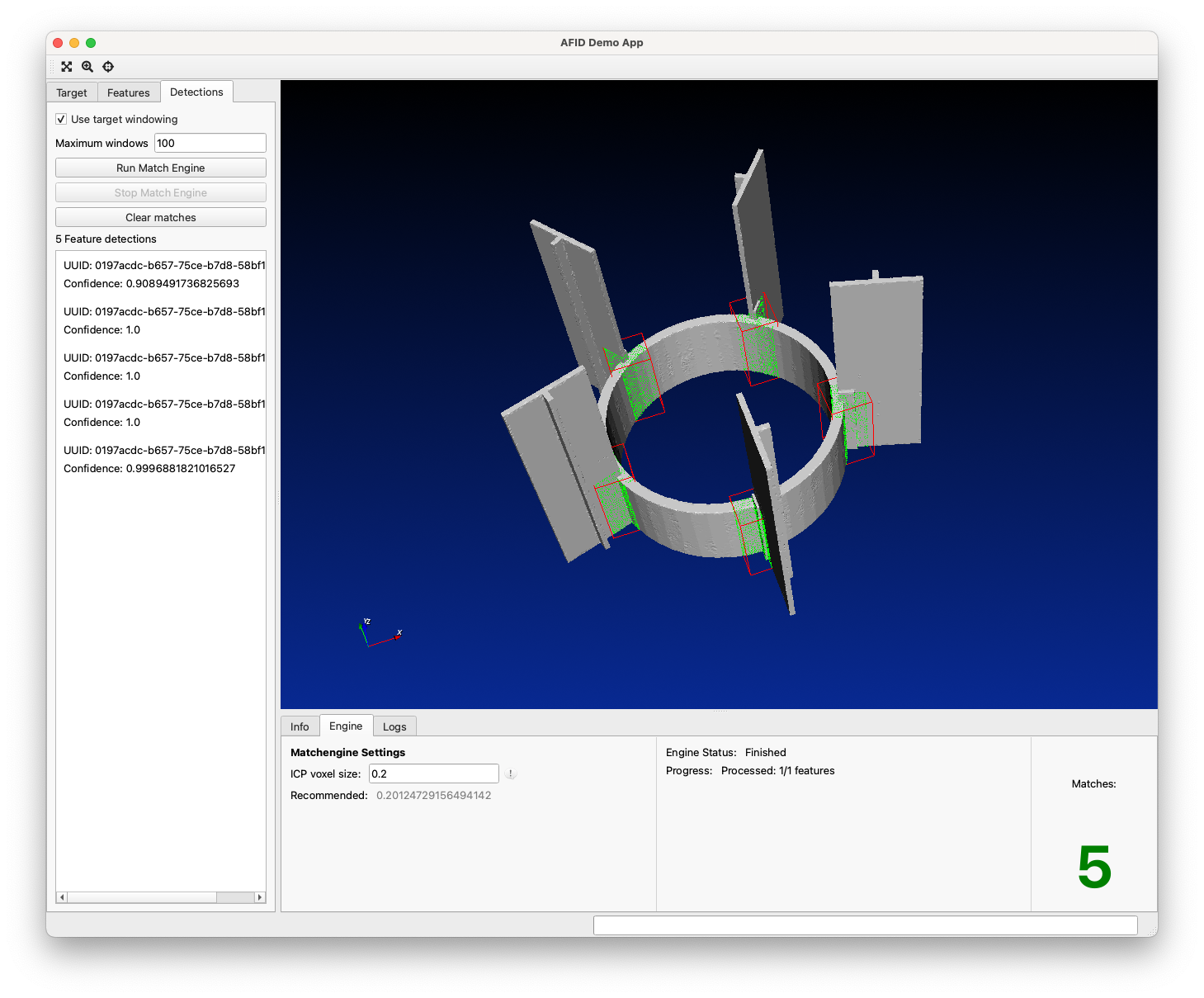
Integration with fTetWild Mesh Generator
fTetWild is a popular open-source mesh generator. AFid works well with its naturally tessellated geometry representation. In this example, the junction region on the fTetWild “impeller” test case is automatically identified and sourced for higher resolution. The screenshot shows the demo application that ships with the AFid software development kit ...
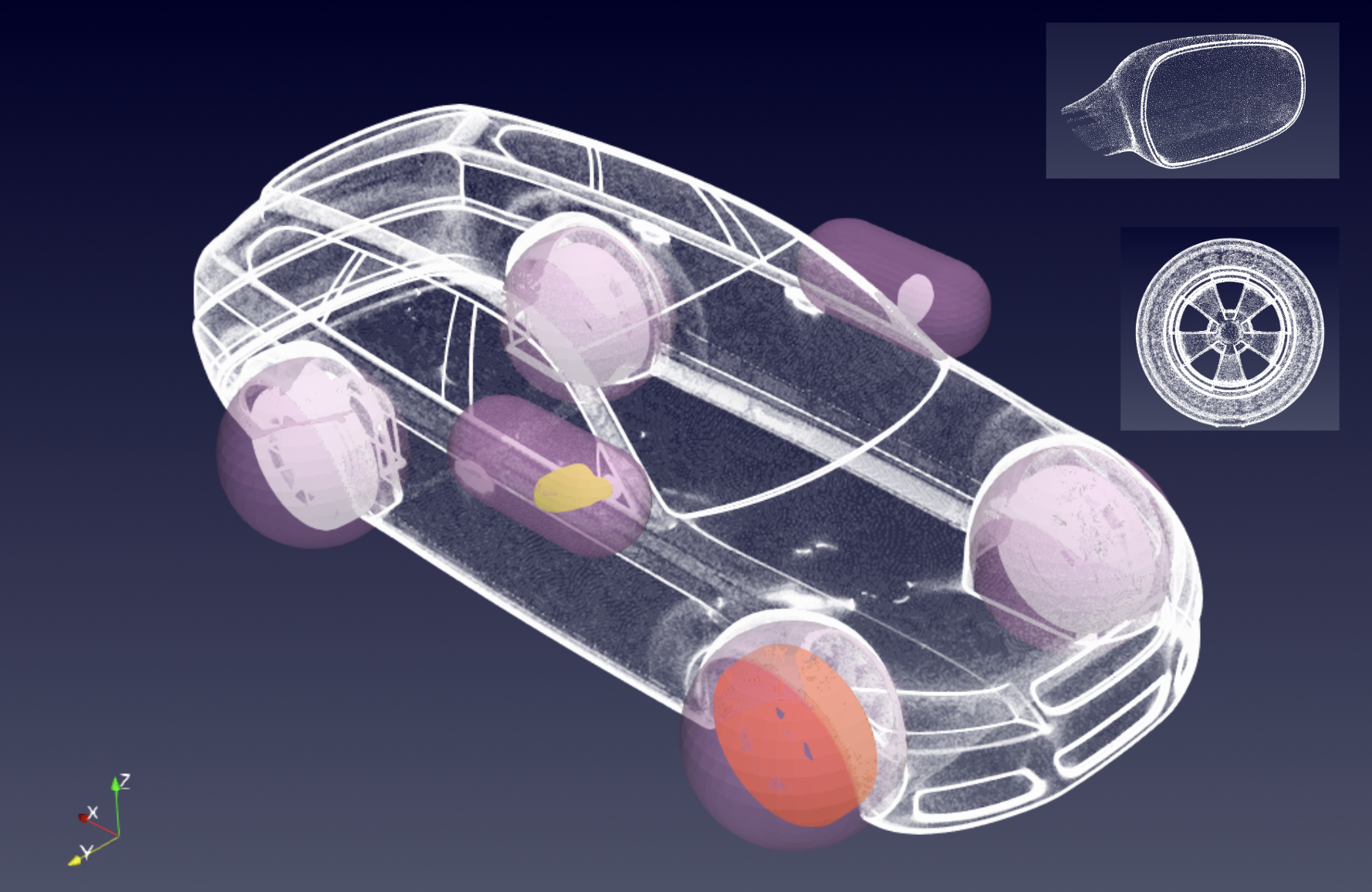
DrivAer Automotive
AFid can be used for application-specific rule application. In this example, the popular DrivAer automotive test case for computational fluid dynamics (CFD) benchmarking has particular features that require special treatment. The wing mirrors produce separated flow and so refinement regions are required in their wake. The wheels are in rotational ...
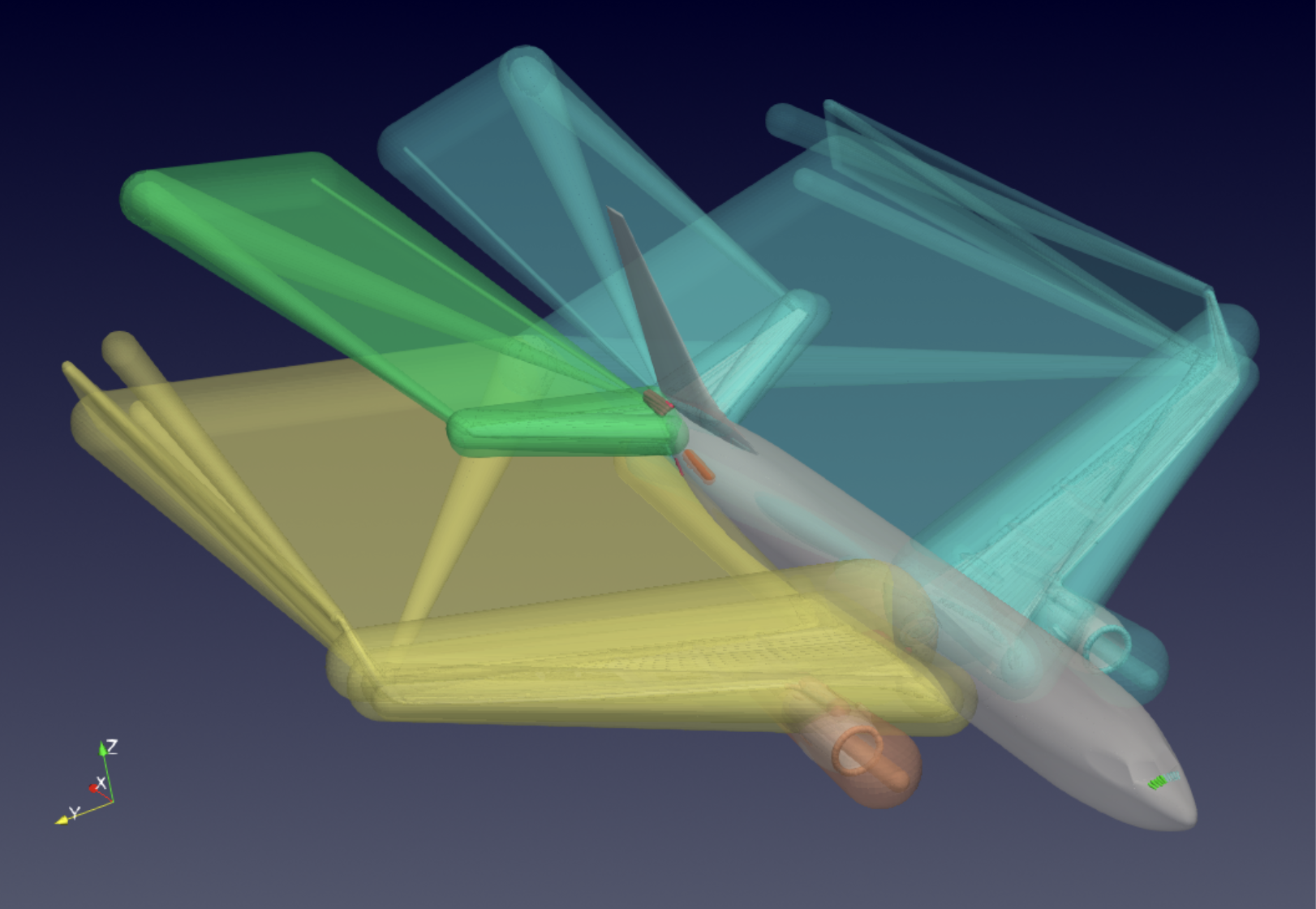
Aerospace Computational Engineering – Boeing 737
AFid is very useful for computational engineering processes where rules (such as mesh spacing) are associated to specific geometric shapes, even if they are not tagged or labelled in a model tree. In this example, over 700 mesh spacing rules (the colourful volumes of interest) are used repeatedly in a ...
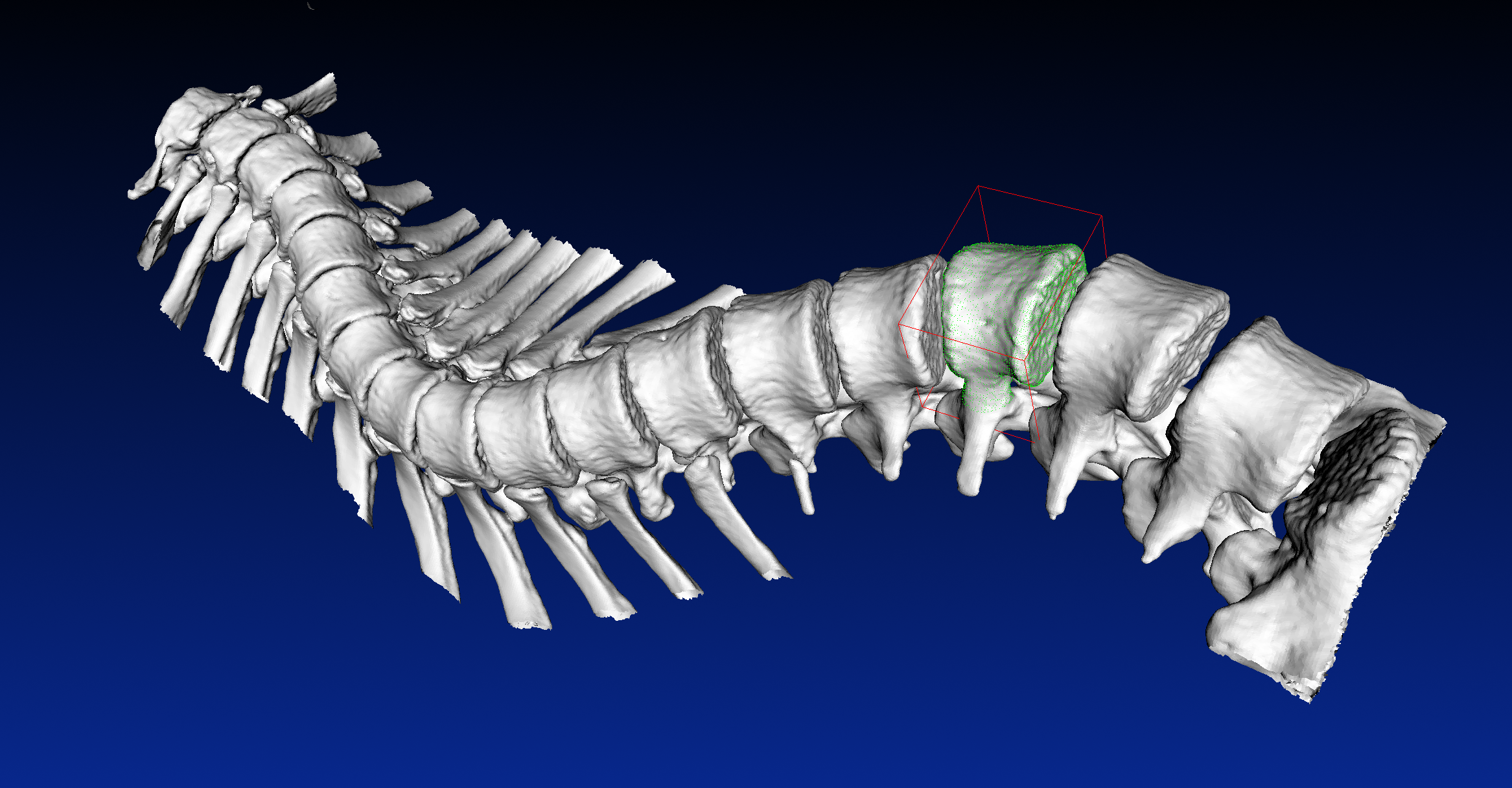
Medical – MRI Human Skeleton
AFid can distinguish between features that are very similar, for example in medical scans (MRI, CT) or CAD. In this example, the MRI data from an entire human skeleton has been converted to a point cloud and a specific vertebra used as the target feature. AFid rapidly identifies the target, ...

ANSYS Meshing Integration
AFid can be easily integrated within third-party applications because of its modular nature and the convenient Python and C/C++ interfaces. In this example, a mesh generation workflow has been set up for a specific set of labels. New geometry is supplied with a different topology and geometric origin, requiring the ...
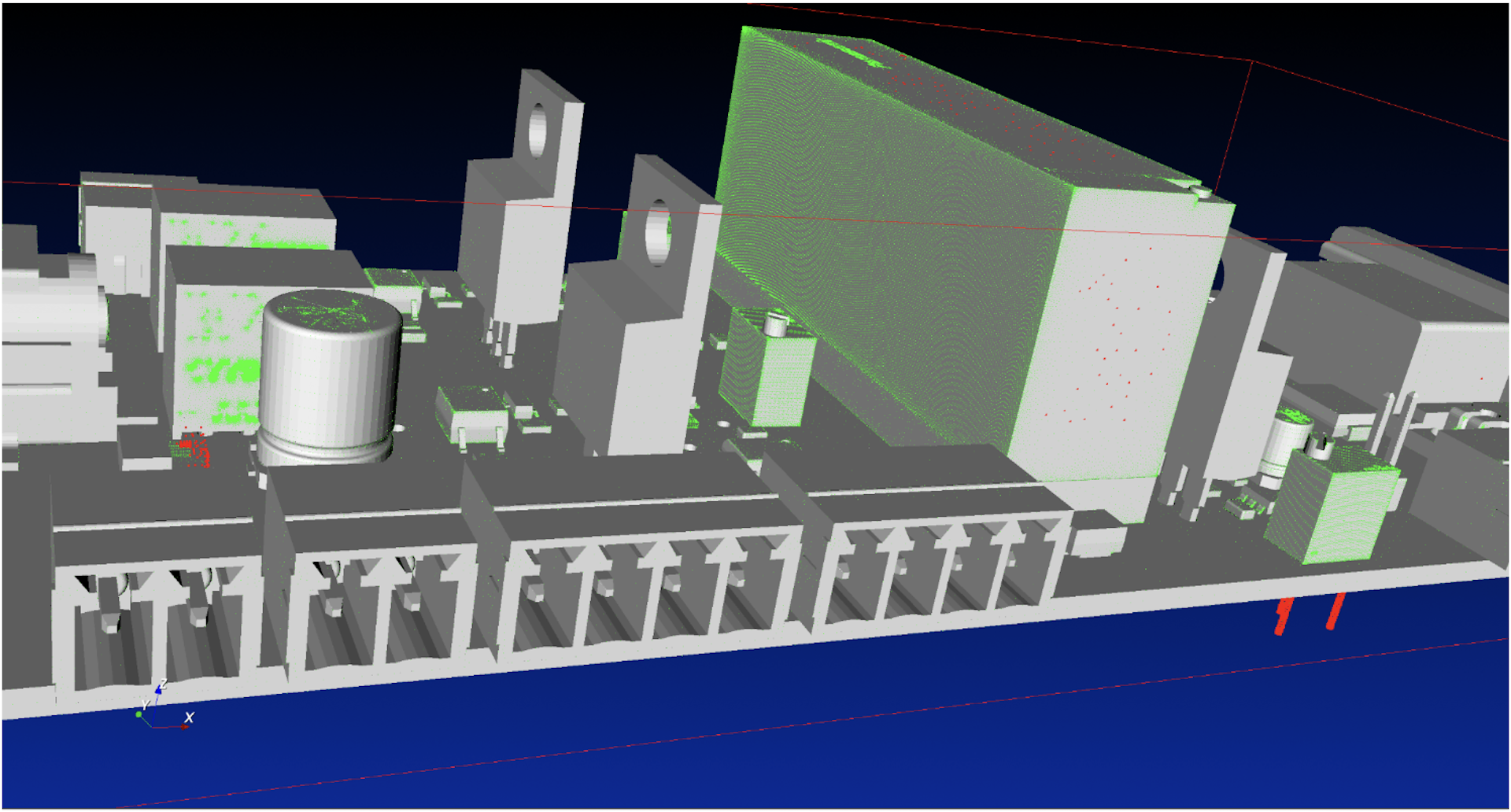
Printed Circuit Board
AFid uses a highly accurate local registration last step in feature recognition, quickly identifying non-conformity between similar objects. For supply-chain and production line checks, AFid can highlight (here in red) the points in the original printed circuit design that are either not present or changed in the new model. This ...

Industrial Factory (CAD or LIDAR data)
AFid can work with point clouds from real-world scanned LIDAR or digital 3D CAD to (i) Compare as-commissioned infrastructure to as-designed models, (ii) Quantify in-service changes from as-designed and through the lifecycle, (iii) Count the number of occurrence of specific parts or sub-assemblies, (iv) Determine changes in the orientation of ...